Chromium Carbide Wear Plate: High-Performance CCO Solutions for Severe Abrasion
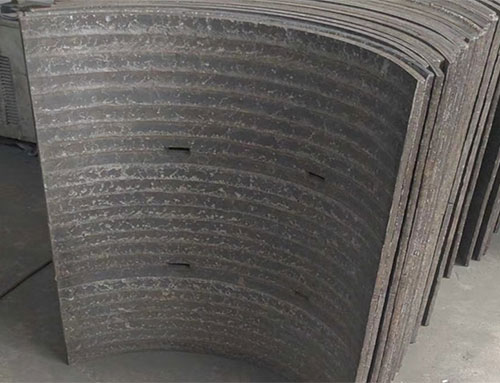
Table of Contents
In heavy industries such as mining, cement, and steel manufacturing, equipment is constantly subjected to severe mechanical wear. Standard steel components frequently degrade under these conditions, leading to costly maintenance shutdowns and lost productivity.

To combat this, industrial operations rely on chromium carbide wear plates—also known as Chrome Carbide Overlay (CCO) plates. This engineered bimetallic material provides unmatched defense against extreme sliding abrasion, significantly extending equipment service life.
What is a Chromium Carbide Overlay (CCO) Plate?
A chromium carbide wear plate is not a monolithic piece of metal. It is a composite material structurally engineered to combine extreme surface hardness with foundational toughness.
Material Composition: Hypereutectic Fe-Cr-C Alloy
The overlay material consists of a hypereutectic iron-chromium-carbon (Fe-Cr-C) alloy. Typically, this chemistry includes 3.0% to 7.5% Carbon and 18% to 45% Chromium. When welded onto a backing plate, this specific chemical combination precipitates tough, wear-resistant carbides during solidification.
Microstructure: The Advantage of Primary M7C3 Carbides
The secret to the plate’s performance lies at the microscopic level. The chemical composition enables the formation of primary Cr7C3 (or M7C3) carbides anchored within a supportive eutectic matrix.

These primary carbides typically achieve a high volume fraction—often exceeding 30% to 50%. Because these hard crystals face incoming abrasive particles head-on, they act as a defensive shield that prevents the softer matrix from flushing away.
Bimetallic Design: Hardfaced Overlay vs. Ductile Steel Backing
CCO plates feature a bimetallic design consisting of two distinct layers:
- The Overlay: The hardfaced, carbide-rich top layer engineered to withstand aggressive sliding wear.
- The Substrate: A ductile mild steel backing plate.
While the overlay provides the necessary wear resistance, it is inherently brittle. The mild steel backing absorbs mechanical shock and structural loads, and allows the composite plate to be welded or bolted directly onto existing structures without cracking the base foundation.
Key Benefits of Chromium Carbide Wear Plates
Unmatched Resistance to Extreme Sliding Abrasion
Unlike standard steels that wear away quickly when scraped by hard minerals, the primary carbides in CCO plates easily deflect moving particulates. This makes them ideal for environments where materials continually slide across a surface.
5x to 10x Longer Service Life Than AR400/500 Steel
When comparing chromium carbide with AR500 steel, traditional quenched-and-tempered abrasion-resistant (AR) steels often fall short. While AR500 steel is hardened throughout, its microstructure lacks the ultra-hard embedded carbides found in CCO. In severe sliding environments, a chromium carbide wear plate delivers a 3x to 10x longer lifespan than AR400 or AR500 plates, offering far better long-term reliability.
Reduced Maintenance Downtime and Total Cost of Ownership (TCO)

Though CCO plates carry a higher upfront price tag than standard steel, their extended lifespan yields a dramatic return on investment. By minimizing the frequency of liner replacements, operations significantly lower their maintenance downtime, labor costs, and overall total cost of ownership.
Impact Resilience and Mechanical Shock Absorption
A common misconception is that CCO plates cannot handle impact due to the brittle nature of carbides. However, the resilient mild-steel backing plate serves as a shock absorber. This unique bimetallic combination enables the wear liner to successfully withstand moderate structural impacts and mechanical shock without shattering.
Environmental Sustainability Gains
By using CCO plates, facilities significantly reduce the frequency of raw steel procurement and component replacement. Less steel production, processing, and transportation directly lowers overall carbon emissions. Reduced waste from discarded worn steel parts also alleviates pressure on industrial waste disposal, making CCO an eco-friendly choice that combines economic efficiency and green production.

Technical Specifications and Material Properties
| Feature | Technical Specification | Industrial Significance |
|---|---|---|
| Surface Hardness | 55 – 65 HRC (550 – 850 BHN) | Superior resistance to scratching and scraping. |
| Chemical Composition | 3.0%–7.5% C | 18%–45% Cr | Optimizes primary M7C3 carbide formation. |
| Microstructure | Primary Cr7C3 carbides (>30%–50% vol. fraction) | Acts as a micro-shield against abrasive particles. |
| Temperature Resistance | Standard: 600°C | Specialized: Up to 900°C | Maintains mechanical properties in high-heat zones. |
| Thickness Range | 3mm to 50mm+ overall thickness | Customizable to fit varying machinery weight limits. |
| Flatness Tolerance | ±3 mm/m | Critical for precision fitting and smooth flow. |
Understanding ASTM G65 Wear Resistance
To objectively measure performance, manufacturers rely on the ASTM G65 wear test. This standardized test forces a dry silica sand abrasive against a test specimen using a rotating rubber wheel. Performance is verified by measuring total material weight loss; chromium carbide plates consistently exhibit minimal mass loss compared to standard carbon and AR steels, proving their superior durability under dense abrasion.
Manufacturing and Quality: Why Process Matters
The method used to apply the hardfacing overlay directly affects the plate’s quality and service life.
Submerged Arc vs. Open Arc Welding
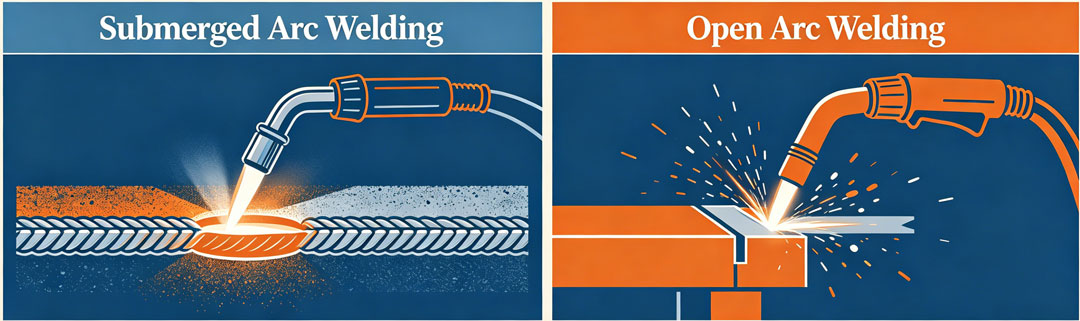
- Open Arc Welding: Typically faster and allows for excellent visual management during the process, but can sometimes introduce higher atmospheric elements into the weld pool.
- Submerged Arc Welding: Utilizes a blanket of granular flux to protect the weld zone. This process limits base-metal dilution (the mixing of the mild-steel backing into the overlay alloy). Minimizing dilution ensures that the top-surface chemistry remains rich in chromium and carbon, thereby maximizing the resulting carbide volume fraction.
The Science of Stress-Relief Check Cracks
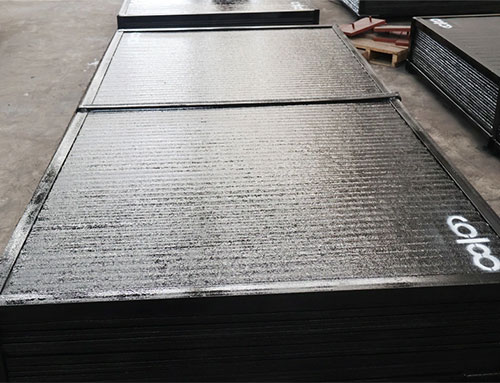
New users are often alarmed to find a network of fine cracks running across the surface of a fresh CCO plate. These are known as stress-relief check cracks, and they are entirely intentional, normal, and necessary.
Because the chromium carbide overlay layer is welded onto mild steel, the two metals shrink at different rates as they cool down. The resulting internal stresses are naturally released by the formation of superficial cracks across the weld beads. These cracks stop precisely at the ductile mild steel backing and do not compromise structural integrity. Without these relief cracks, the plate would distort, warp, or fail during fabrication.
Fabrication and Installation Guidelines
Precision Cutting
Because the surface layer resists friction-based wear, traditional mechanical saws cannot cut through a CCO plate. Instead, fabricators use Plasma Arc cutting (typically at 1.0–1.5 m/min) or high-pressure Waterjet cutting systems. It is highly recommended to cut from the mild-steel backing side toward the overlay to prevent hard carbides from contaminating the initial cut line.
Structural Welding and Bolting
When installing custom-fabricated wear liners, welding should be performed exclusively on the ductile mild steel substrate. Standard structural welding wires (such as E7018) bond easily to the backing plate. If the plates must be secured from the front, countersunk holes can be cut with a plasma cutter, allowing plug welding or specialized bolting directly to the machinery walls.
Cold Bending and Rolling
CCO plates can be curved to line radiused chutes, pipes, and cyclone walls. However, because the overlay is brittle, fabricators must observe a generous minimum cold bending radius (typically >20x the overall thickness). Bending with the overlay on the inside forces the check cracks to close, whereas bending with the overlay on the outside causes the pre-existing relief cracks to open wider, which is acceptable within manufacturer tolerances.
Industrial Applications for CCO Wear Solutions
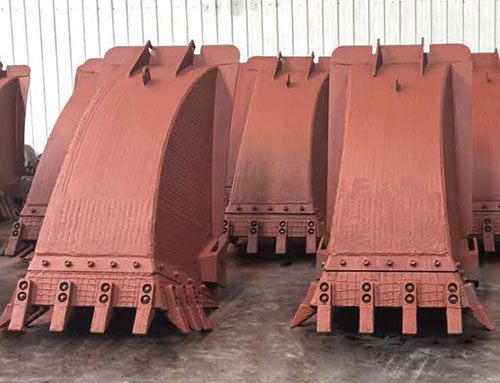
- Mining and Quarrying: Used extensively to line transfer chutes, hopper bins, truck beds, and excavator bucket liners that handle abrasive run-of-mine ores.
- Cement and Steel Mills: Deployed in high-velocity zones like raw material coal pulverizers, cyclone separators, heavy-duty fan blades, coke hoppers, and sinter plant components.
- Power Generation: Protects pulverizer mills, exhauster fans, and pneumatic coal piping systems from the highly abrasive effects of pulverized fuel.
Frequently Asked Questions (FAQ)
Are more overlay layers always better for wear life?
Not necessarily. While a double or triple-layer overlay provides greater thickness, it also accumulates higher residual stresses and can increase the risk of spalling (delamination) under impact. A single, high-quality layer with an optimized primary carbide volume fraction often outperforms multiple layers that suffer from high base-metal dilution.
Does the paint on a wear plate affect its performance?
No. Manufacturers typically apply a thin layer of primer or paint to the backing steel to prevent oxidation during storage and transport. This coating burns off quickly during welding or wears away instantly once abrasive materials begin moving across the surface.
Can CCO plates be used in acidic or corrosive environments?
Yes, to an extent. The high chromium content (up to 45%) provides a natural baseline of corrosion resistance, similar to stainless steel. However, if the environment involves highly concentrated acids or extreme chemical attack alongside abrasion, specialized premium alloys containing elements like niobium or tungsten may be required.
What is the difference between Chromium Carbide and Tungsten Carbide?
The primary difference comes down to hardness, application layout, and cost. Tungsten carbide is notably harder and is generally used in solid-matrix inserts or precision tools (such as drill bits and cutting teeth). However, it is far more expensive and difficult to manufacture over large surface areas. Chromium carbide strikes the ideal balance for heavy industry: it offers exceptional resistance to widespread sliding abrasion and can be easily produced as large, weldable, cost-effective bimetallic plates.
Quality
Strict quality control standards to ensure every product meets the expected reliability and performance.
Price
Competitive prices that strike a perfect balance between cost-effectiveness and the value you deserve.
Service
Professional customer service is always ready to address your needs and provide satisfactory solutions promptly.
Management
Efficient and standardized operations powered by an ERP system to comprehensively manage all business processes.

Get in touch with us
Take a minute to connect with us today, and let’s turn your needs into results. We can’t wait to hear from you!