Maximizing Equipment Lifespan: The Strategic Role of Weld-On Wear Plates
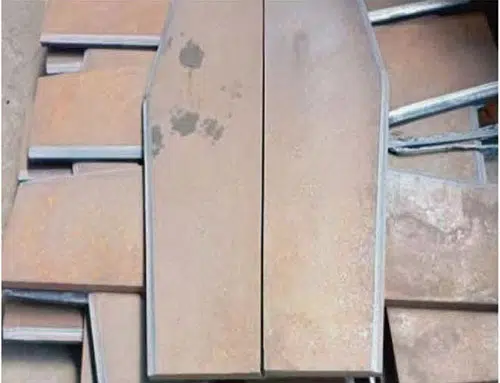
Table of Contents
In the world of heavy industry—ranging from open-pit mining and aggregate processing to industrial recycling—equipment is constantly under siege. Whether it’s the abrasive slide of crushed granite or the high-velocity impact of scrap metal, the steel surfaces of your machinery are in a perpetual state of degradation. For B2B operations, this degradation isn’t just a maintenance issue; it is a financial one.
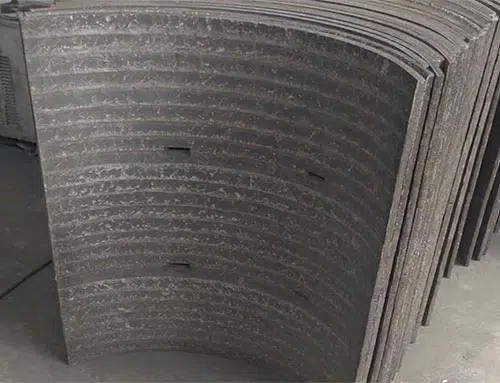
The solution for many global leaders in these sectors is the strategic application of weld-on wear plates. These sacrificial liners act as a shield, absorbing the brunt of the kinetic energy and friction that would otherwise destroy primary structural components.
Why Weld-On Protection Beats the Competition
When selecting a wear solution, procurement and maintenance managers often choose between bolt-on and weld-on options. While bolt-on liners offer convenience for quick swaps, weld-on wear plates provide distinct engineering advantages that make them the gold standard for extreme-duty applications:
1. Superior Structural Integrity
In high-vibration environments, such as vibrating screens or primary crushers, bolts can loosen over time due to harmonic resonance. A weld-on plate becomes a monolithic part of the machine. This permanent bond ensures that the liner will not shift or rattle, preventing secondary wear on the base metal beneath the plate.
2. Elimination of Flow Obstructions
In material handling chutes and hoppers, bolt heads can create “catch points” where material begins to build up. This leads to “bridging” or “plugging,” which can shut down an entire production line. Weld-on plates offer a flush, continuous surface that maintains a consistent material flow.
3. Versatility in Geometry
Modern heavy equipment often features complex curves and tapered angles. Bolt-on systems require precise alignment of pre-drilled holes, which can be impossible on warped or older equipment. Weld-on liners can be custom-cut and fitted to almost any surface, providing a tailored fit that protects every square inch of the asset.
Choosing the Right Material: AR400 vs. AR500 vs. CCO
Not all wear environments are the same, and neither are the plates. To optimize your ROI, you must match the material chemistry to the specific stressor:
AR400 and AR450 (Abrasion Resistant)
These are the workhorses of the industry. With a Brinell hardness of approximately 400–450 HBW, these plates offer an excellent balance of toughness and weldability. They are ideal for applications involving sliding abrasion, such as dump truck liners or conveyor chutes.
AR500 (High-Hardness Steel)
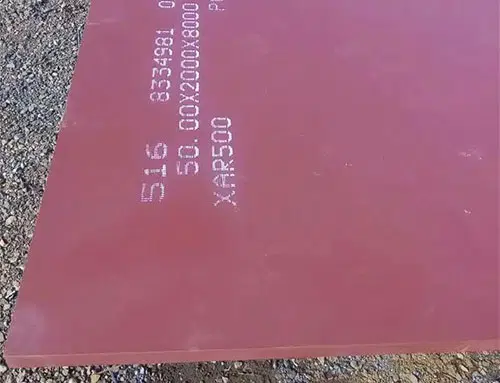
When the abrasive forces increase, AR500 is the go-to choice. With a hardness of 500 HBW, it provides significantly longer life than AR400. However, it is more “brittle.” In applications with extreme impact (e.g., dropping large boulders from height), AR500 can crack if not supported properly.
Chromium Carbide Overlay (CCO)
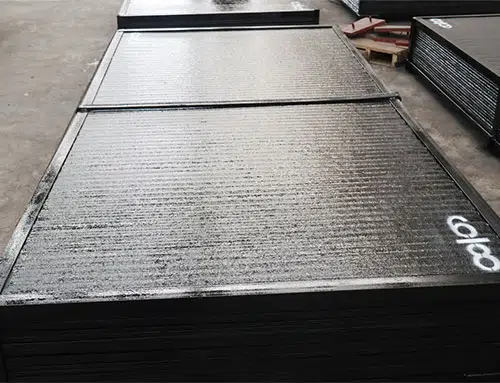
For the most punishing environments, CCO plates consist of a mild steel base plate with a thick layer of chromium-rich hardfacing welded on top. While more expensive upfront, CCO can outlast standard AR steel by a ratio of 8:1, making it the most cost-effective choice for long-term installations where replacement labor costs are high.
Professional Installation: Best Practices for B2B Maintenance
The longevity of a weld-on wear plate is only as good as the weld that holds it. Because these plates are high-carbon alloys, they require specific metallurgical care:
1. The Necessity of Pre-Heating
Welding a cold AR500 plate can cause the Heat Affected Zone (HAZ) to cool too rapidly, creating a brittle molecular structure that leads to “underbead cracking.” Professionals recommend pre-heating the base material to between 150°C and 200°C to ensure a slow, controlled cooling process.
2. Strategic Plug Welding
For large surface areas, a perimeter weld is insufficient. As the plate heats up during operation, it can expand and “bow” away from the base metal. To prevent this, plug welds should be placed in a grid pattern across the center of the plate. This ensures the liner remains flat and fully supported by the host structure.
3. Selecting the Right Filler Metal
Using a high-strength, low-hydrogen electrode (such as E7018 or an equivalent wire) is critical. This reduces the risk of hydrogen embrittlement, ensuring the weld remains ductile enough to absorb the shocks of industrial operation.
The Economic ROI of Wear Management
In B2B procurement, the “sticker price” of a weld-on wear plate is a misleading metric. Instead, managers should look at the Total Cost of Ownership (TCO).
Consider a scenario where an unprotected chute requires structural repair every 6 months, costing $10,000 in labor and $50,000 in lost production. By installing a premium AR500 weld-on plate for $5,000, the maintenance interval may extend to 24 months.
Total Savings: By spending $5,000 today, the operation saves over $150,000 in repair and downtime costs over two years.
Conclusion
Weld-on wear plates are more than just pieces of steel; they are a strategic investment in operational uptime. By understanding the metallurgy, mastering the installation, and focusing on the long-term TCO, industrial operations can turn a high-maintenance headache into a streamlined, high-efficiency process.
Is your equipment protected for the next season? Contact our engineering team today for a comprehensive wear audit and custom-cut plate solutions designed for your specific application.
Quality
Strict quality control standards to ensure every product meets the expected reliability and performance.
Price
Competitive prices that strike a perfect balance between cost-effectiveness and the value you deserve.
Service
Professional customer service is always ready to address your needs and provide satisfactory solutions promptly.
Management
Efficient and standardized operations powered by an ERP system to comprehensively manage all business processes.

Get in touch with us
Take a minute to connect with us today, and let’s turn your needs into results. We can’t wait to hear from you!