
Why Chutes, Hoppers, and Crushers Use Overlay Wear Plates?
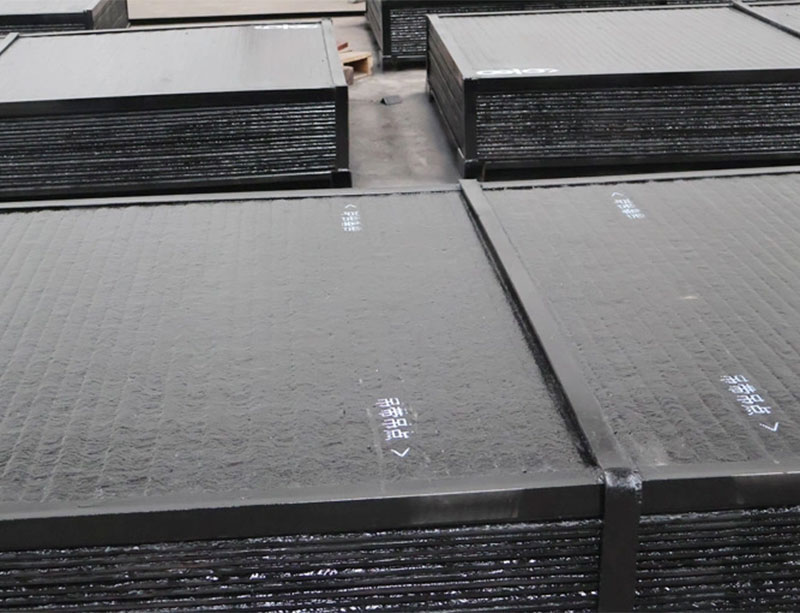
Table of Contents
Introduction
In mining, cement production, quarrying, and bulk material processing facilities, chutes, hoppers, and crushers bear the harshest operational stress every single day. These core industrial components continuously handle sharp, heavy, and abrasive materials such as ore, rock, gravel, and industrial minerals. Constant sliding friction, severe impact force, and persistent erosion gradually wear down raw steel surfaces, leading to frequent equipment damage, unplanned downtime, and skyrocketing maintenance costs.
This is where overlay wear plates become an indispensable protective solution. Most plant operators and mechanical engineers prioritize overlay wear plates for chutes, hoppers, and crushers—not as an optional upgrade, but as a mandatory industrial component. In this guide, we break down exactly why these three types of processing equipment depend on overlay wear plates, how they work, their key advantages, and their real-world industrial application value.
What Are Overlay Wear Plates?
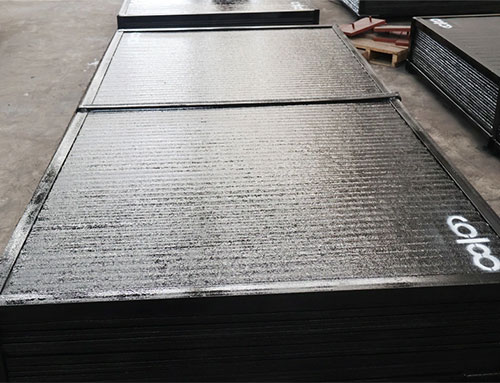
Before diving into application reasons, it is critical to clarify the definition and structure of overlay wear plates. Also known as hardfaced or bimetallic wear plates, overlay wear plates are composite metal materials manufactured using professional surfacing welding technology.
They feature a dual-layer structure:
- Base Layer: Tough mild steel or low-alloy steel substrate, providing excellent mechanical strength, shock absorption, and ease of installation.
- Overlay Layer: High-hardness alloy cladding (commonly chromium carbide or tungsten carbide), delivering extreme abrasion and erosion resistance.
Unlike single-layer steel plates, this bimetallic design balances structural toughness and surface wear resistance, making overlay wear plates uniquely suitable for heavy-duty industrial environments where impact and friction coexist.
Why Chutes, Hoppers & Crushers Need Overlay Wear Plates
1. Resist Severe Abrasion from Bulk Materials
Chutes and hoppers act as material transfer and buffering hubs in processing lines. Bulk materials slide, collide, and continuously flow along the inner metal surfaces. Crushers endure violent impacts and extrusion during material crushing. Raw carbon steel wears rapidly under such long-term sliding abrasion and particle scouring.
Overlay wear plates solve this pain point perfectly. The carbide-rich overlay surface has ultra-high hardness, effectively resisting gouging and cutting wear caused by sharp mineral particles. Field data shows that chromium carbide overlay plates can extend component service life by 10 to 25 times compared with ordinary steel plates.
2. Absorb Heavy Impact Loads
Large ores and heavy aggregates fall from heights into hoppers and chutes, generating powerful instantaneous impact force. Traditional wear-resistant steel often cracks or deforms under repeated heavy impacts. Thanks to the ductile steel base layer, overlay wear plates efficiently buffer impact energy, while the hard alloy overlay prevents surface spalling. This dual-performance protection is irreplaceable for heavy-duty crushers and feeding chutes.
3. Cut Unplanned Downtime & Maintenance Costs
For industrial processing plants, equipment downtime means direct production losses. Without protective wear plates, chutes, hoppers, and crushers require frequent welding repair, liner replacement, and surface polishing. Such frequent maintenance interrupts production schedules and increases labor and spare parts costs.
Installing overlay wear plates significantly reduces replacement frequency. Their stable wear resistance standardizes maintenance cycles, helping maintenance teams arrange inspections scientifically and minimize unplanned shutdowns. Most enterprises recover the procurement cost of overlay wear plates within 6 to 12 months through reduced part replacement and downtime losses.
4. Adapt to Complex Equipment Structures
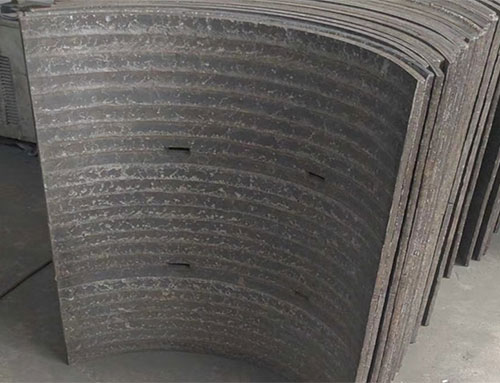
Chutes and hoppers usually have curved, tapered, and irregular internal structures, while crushers contain complex crushing cavities and feeding ports. Overlay wear plates have excellent cold forming performance; they can be cut, bent, and customized to fit curved surfaces without damaging the internal alloy structure. With reserved mounting holes and welded studs, the plates support quick installation and disassembly, greatly improving construction efficiency.
5. Improve Operational Safety & Production Stability
Excessively worn metal surfaces are prone to peeling, plate perforation, and material leakage, which not only pollute the production site but also increase the risk of mechanical failure. Overlay wear plates maintain surface flatness for extended periods, ensuring smooth material flow, eliminating material blockages in chutes and hoppers, and reducing crusher jamming failures. A stable production system further lowers hidden safety hazards for on-site workers.
Common Overlay Wear Plate Types for The Equipment
Different working conditions require matched overlay wear plate types; here are the most widely used options:
- Chromium Carbide Overlay (CCO) Plates: The most cost-effective option, ideal for general mining chutes, aggregate hoppers, and crusher inlet liners, resisting sliding abrasion.
- Tungsten Carbide Overlay Plates: For extreme abrasive working conditions, such as high-hardness ore crushing and high-speed material transfer.
- Medium-Thickness Bimetallic Plates: Suitable for parts with both impact and friction stress, such as crusher crushing walls and discharge chutes.
Frequently Asked Questions (FAQ)
Q1: Are overlay wear plates worth the higher upfront cost?
Yes. Although overlay wear plates have a higher initial procurement cost than ordinary steel liners, their ultra-long service life cuts frequent replacement and labor costs. For long-term industrial operation, they deliver superior total cost performance.
Q2: Can overlay wear plates withstand high-temperature working conditions?
Standard chromium carbide overlay plates are suitable for conventional ambient temperatures. Custom high-temperature-resistant overlay plates are available for cement kiln chutes and high-temperature material hoppers to meet specific operational needs.
Q3: How long does an overlay wear plate last on a crusher?
Service life depends on material hardness and daily operating hours. Under normal mining conditions, overlay wear plates used for crusher liners can work continuously for 12 to 24 months, far exceeding the 1 to 3 months service life of ordinary steel plates.
Conclusion
Chutes, hoppers, and crushers are core equipment vulnerable to abrasion and impact in bulk material processing. Overlay wear plates stand out as a reliable protective solution due to their dual-layer composite structure, outstanding abrasion and impact resistance, and flexible installation. They not only extend equipment service life and reduce maintenance costs but also stabilize production efficiency and improve on-site safety.
For mining, quarry, cement, and mineral processing enterprises, investing in high-quality overlay wear plates is a low-risk, high-return industrial optimization measure. If you are looking for customized wear-resistant solutions for chutes, hoppers, or crushers, feel free to contact our professional engineering team for tailored recommendations.
Quality
Strict quality control standards to ensure every product meets the expected reliability and performance.
Price
Competitive prices that strike a perfect balance between cost-effectiveness and the value you deserve.
Service
Professional customer service is always ready to address your needs and provide satisfactory solutions promptly.
Management
Efficient and standardized operations powered by an ERP system to comprehensively manage all business processes.

Get in touch with us
Take a minute to connect with us today, and let’s turn your needs into results. We can’t wait to hear from you!