
Excavator Rock Bucket: Ultimate Guide to Features, Uses, Selection & Maintenance
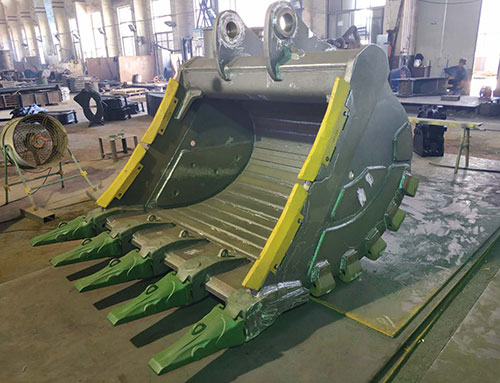
Table of Contents
In heavy-duty construction, mining, quarrying, and demolition projects, standard excavator buckets often fail to meet performance expectations. Soft steel bodies, thin wear plates, and weak tooth structures cannot withstand the extreme abrasion, heavy impacts, and high-pressure loads generated by hard rock, boulders, concrete debris, and abrasive mine materials. This is where the excavator rock bucket becomes an indispensable attachment for professional contractors and mining operators. Engineered exclusively for harsh working conditions, the rock bucket delivers superior durability, stronger digging penetration, and longer service life, drastically improving project efficiency and reducing equipment operating costs. This comprehensive guide dives deep into everything you need to know about excavator rock buckets, including core design features, key advantages, application scenarios, selection criteria, and professional maintenance tips.
1. What Is an Excavator Rock Bucket?
An excavator rock bucket is a heavy-duty, reinforced attachment purpose-built to handle tough, abrasive, high-density materials that standard digging buckets cannot process efficiently. Unlike general-purpose buckets designed for loose soil, sand, and gravel, rock buckets are constructed from high-tensile, wear-resistant steel, thickened structural plates, and reinforced stress points to withstand continuous impacts, friction, and heavy loads in extreme working environments.
Primarily used for digging, ripping, lifting, and loading hard rock, quarry stone, blasted rock fragments, broken concrete, demolition debris, and mine waste, this specialized bucket is a core tool for high-intensity earthmoving and material handling tasks. It is compatible with excavators ranging from small 6-ton compact machines to large 90-ton mining excavators, covering a wide range of project scales from small municipal demolition to large open-pit mining operations.
2. Core Structural Features of High-Performance Rock Buckets
The outstanding performance of an excavator rock bucket stems from its optimized industrial design and premium material configuration. Every structural detail is tailored for anti-wear, anti-deformation, and high-strength performance, distinguishing it radically from standard and light-duty buckets.
2.1 Premium High-Tensile Wear-Resistant Steel Construction
Top-tier rock buckets adopt AR400/AR500 abrasion-resistant steel for critical components, paired with mild alloy steel for the main body. This material combination delivers exceptional hardness, impact resistance, and abrasion resistance, effectively preventing surface scratching, plate thinning, and structural cracking from long-term friction against hard rock. Compared with ordinary mild steel buckets, high-tensile steel rock buckets extend service life by 2–3 times in harsh working conditions.
2.2 Reinforced Thickened Plate & Stress Distribution Design
Rock buckets feature significantly thickened bottom plates, side plates, and front cutting edges, with additional integrated reinforcement ribs and gussets at high-stress areas such as the bucket ear and hinge connection. This structural design evenly distributes the instantaneous impact force generated during hard rock excavation, preventing bucket body deformation, welding seam cracking, and structural fatigue damage. The reinforced side cutters also enhance lateral rigidity, ensuring stable operation during rock ripping and sorting.
2.3 Heavy-Duty Rock Teeth & V-Shaped Cutting Edge
Equipped with forged, high-hardness rock teeth (longer and sharper than standard bucket teeth) and a V-shaped integral cutting edge, rock buckets achieve superior ground penetration. The pointed tooth structure easily pierces hard rock layers and frozen soil, while the V-edge concentrates digging force, reducing the excavator’s breakout force consumption and improving ripping efficiency. Most models use replaceable-tooth designs, allowing quick replacement of worn teeth without replacing the entire bucket, thereby lowering maintenance costs.
2.4 Optimized Bucket Capacity & Fill Factor
Professional rock buckets balance structural strength and loading capacity. With a streamlined inner cavity design, they boast a higher fill factor than ordinary heavy-duty buckets, ensuring full material loading while avoiding excessive weight that increases excavator fuel consumption. The optimized arc structure also reduces material adhesion, making the unloading of sticky rock and debris faster and cleaner.
3. Rock Bucket vs Standard Bucket vs Heavy-Duty Bucket: Key Differences
Many contractors confuse rock buckets with ordinary heavy-duty buckets, but their performance and application scenarios differ vastly. The following comparison clarifies their core distinctions to help you select the right attachment:
- Standard Digging Bucket: Made of ordinary steel with thin plates and common teeth. Designed for loose soil, sand, and gravel. Low wear resistance, unable to withstand the impact of hard rocks. Suitable for general landscaping, foundation digging, and loose earthmoving tasks with low working intensity.
- Heavy-Duty Bucket: Slightly thickened plates and enhanced wear resistance, suitable for mixed soil, small broken stones, and medium-abrasion materials. Durable than standard buckets but insufficient for large hard rock and high-intensity quarry operations, prone to deformation and tooth breakage in extreme conditions.
- Rock Bucket: Full wear-resistant steel configuration, overall reinforcement, professional rock teeth, and anti-impact structure. Exclusively for hard rock, quarry stone, demolition concrete, and mining waste. Maximum durability and stability in high-abrasion, high-impact working environments.
4. Primary Applications of Excavator Rock Buckets
The versatile, high-strength properties of rock buckets make them essential across multiple heavy industries, solving core pain points such as low efficiency and easy attachment damage in tough construction scenarios.
4.1 Quarry & Stone Processing Operations
At quarry sites, rock buckets handle blasted raw stone, sort stone, and load finished aggregate. Their high penetration and load-bearing capacity enable efficient shovelling of irregular hard stone blocks, while the wear-resistant structure withstands long-term friction against sharp stone edges. This greatly improves loading efficiency and reduces the frequency of damaged bucket replacements.
4.2 Open-Pit Mining Projects
Mining environments feature ultra-high abrasion and heavy-load working conditions. Rock buckets are used for ore extraction, waste rock removal, and material separation. They can directly screen and separate valuable ore from waste rock on-site, reducing transportation volume and lowering overall project costs. Multi-tonnage rock buckets suit small to large mining excavators, adapting to varying mining-scale demands.
4.3 Construction & Demolition Engineering
During building demolition, road renovation, and bridge dismantling, rock buckets efficiently process broken concrete, steel-mixed debris, and crushed stone. They can cooperate with hydraulic breakers to clean up broken rock residues after crushing, realizing integrated crushing and loading operations and significantly accelerating construction progress.
4.4 Hard Soil & Frozen Ground Excavation
In cold regions or areas with hard soil layers, ordinary buckets struggle to penetrate compacted soil and frozen ground. The sharp rock teeth and high breakout force of rock buckets easily rip through hard strata, improving excavation efficiency for foundation engineering, trench digging, and land development projects.
5. Key Benefits of Using a Professional Rock Bucket
Investing in a high-quality excavator rock bucket brings long-term economic and operational benefits for construction enterprises, far outweighing the cost of ordinary buckets.
5.1 Dramatically Reduced Wear & Maintenance Costs
The full wear-resistant steel structure minimizes component wear, avoiding frequent replacement of buckets, teeth, and side cutters. Stable structural performance reduces equipment failure downtime and maintenance labor costs, ensuring continuous project operation.
5.2 Improved Construction Efficiency & Productivity
Superior penetration and high fill factor enable one-time completion of digging and loading, avoiding repeated operations caused by insufficient bucket strength. It perfectly matches the working rhythm of excavators, increasing daily material-handling volume and shortening project cycles.
5.3 Protected Excavator Main Equipment
A low-quality bucket requires the excavator to output higher hydraulic pressure and breakout force to complete operations, increasing fuel consumption and wear on hydraulic systems, booms, and arms. Rock buckets with reasonable structural design reduce machine load, lower fuel consumption, and extend the service life of the main excavator.
5.4 Strong Environmental Adaptability
Rock buckets maintain stable performance in harsh, high-dust, high-abrasion, low-temperature, high-load environments, without structural deformation or performance degradation, ensuring reliable operation in all-weather construction scenarios.
6. How to Choose the Right Excavator Rock Bucket (Professional Selection Guide)
Selecting a matched rock bucket is critical to maximizing construction efficiency and service life. Follow these core selection criteria:
6.1 Match Excavator Tonnage
Small 6–12 ton excavators suit lightweight reinforced rock buckets with small capacity; 20–30 ton medium excavators match standard heavy rock buckets for conventional quarry and demolition work; 30–90 ton large mining excavators require ultra-heavy rock buckets with thickened plates and large load capacity to meet high-intensity mining operations. Mismatched tonnage will cause insufficient power or excessive machine load.
6.2 Select Materials Based on Working Conditions
For conventional stone and demolition waste, NM400 wear-resistant steel is cost-effective; for high-abrasion mining and large hard rock operations, choose NM500 high-hardness wear-resistant steel for key components to enhance durability.
6.3 Confirm Bucket Capacity & Structural Configuration
Determine the bucket capacity based on material density and construction efficiency requirements. Prioritize models with reinforced ribs, replaceable rock teeth, and thickened side plates to ensure structural stability. Avoid low-priced inferior products with thin plates and ordinary steel, which are prone to damage.
6.4 Verify Welding Process & Quality Inspection
High-quality rock buckets use full-penetration welding and stress-relief treatment to prevent cracking at the weld seam. Check for smooth weld lines, no pores or cracks, and uniform wear plate thickness to ensure overall structural robustness.
7. Daily Maintenance & Care Tips for Rock Buckets
Scientific maintenance can double the service life of excavator rock buckets and maintain stable working performance:
- Regular Cleaning: Clean any residual rock, concrete, and debris inside and outside the bucket after daily work to prevent long-term material buildup, which can cause corrosion and increased wear.
- Timely Inspection of Wear Parts: Frequently check rock teeth, side cutters, and bottom wear plates. Replace severely worn teeth in time to avoid reduced digging efficiency and secondary damage to the bucket body.
- Check Welding Seams & Structural Parts: Regularly inspect welding seams and reinforcement ribs for cracks or deformation. Repair minor cracks in time to prevent structural expansion damage.
- Lubricate Connecting Parts: Maintain lubrication at the bucket hinge and pin shaft to reduce friction wear and ensure flexible rotation.
- Avoid Overload Operation: Do not use the bucket for violent prying or overload lifting beyond the rated load, as this can cause permanent deformation of the bucket body.
8. Final Thoughts
The excavator rock bucket is a high-value, cost-effective core attachment for all heavy-duty construction scenarios involving hard rock, quarrying, mining, and demolition. Its reinforced structure, premium wear-resistant materials, and professional functional design address the pain points of low efficiency, susceptibility to damage, and high cost associated with standard buckets in harsh environments. Choosing a high-quality, tonnage-matched rock bucket and adhering to standardized daily maintenance can effectively improve construction productivity, reduce equipment operating costs, and create greater economic benefits for engineering projects. For contractors and mining operators pursuing long-term, stable operations, upgrading to a professional rock bucket is an essential investment in project efficiency and equipment protection.
Quality
Strict quality control standards to ensure every product meets the expected reliability and performance.
Price
Competitive prices that strike a perfect balance between cost-effectiveness and the value you deserve.
Service
Professional customer service is always ready to address your needs and provide satisfactory solutions promptly.
Management
Efficient and standardized operations powered by an ERP system to comprehensively manage all business processes.

Get in touch with us
Take a minute to connect with us today, and let’s turn your needs into results. We can’t wait to hear from you!